WiFi 6, not 7
It’s WiFi 6, not 7. I do believe the new Flint 4 is coming, with WiFi 7, but I’ve got no need for it right now.
Unless I get one for free, I probably won’t be writing a review of the Flint 4.
What can I say? It’s a really good router. One of the best, I’d say. And I’ve never once had to reboot it.
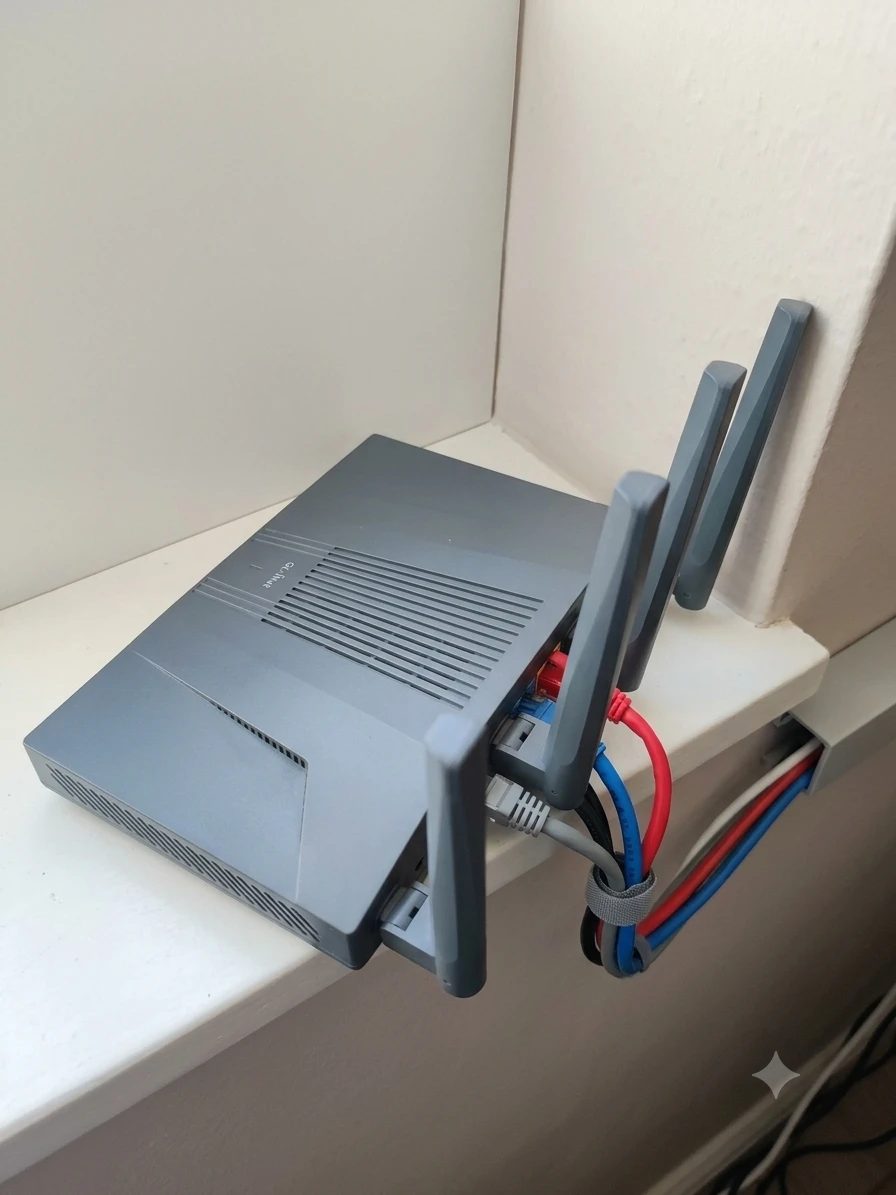
Anyone on a 1G internet connection. It’s got everything out of the box. Not for me any more, but I’d recommend it.
£129 About what it costs as I type this.
It’s WiFi 6, not 7. I do believe the new Flint 4 is coming, with WiFi 7, but I’ve got no need for it right now.
Unless I get one for free, I probably won’t be writing a review of the Flint 4.
I bought this over the Flint 3 because the more powerful CPU inside actually pulls ahead when you’re using a VPN.
Using WireGuard, I got 1,350Mbps download.
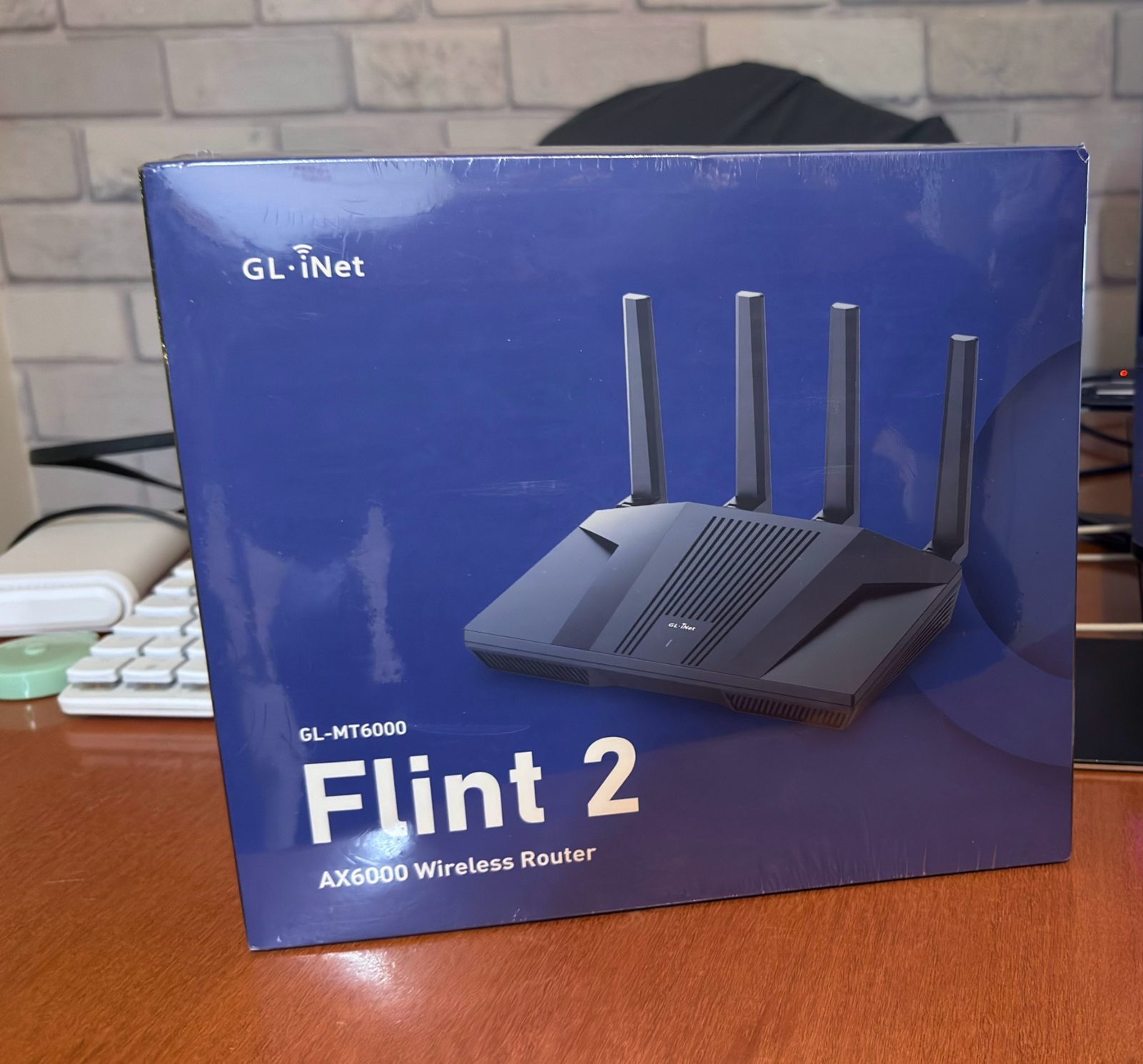
When GL.iNet released all its latest features recently, I found that if you go ahead and turn some of them on, the VPN speed dips below 1Gbps download.
So why do I still have it? Right now it’s my backup router, with the WiFi switched off. If my pfSense box goes down for whatever reason, I just swap two ethernet cables round and I’m back in business.
I don’t use the VPN on it any more, but I do run one thing on it: AdGuard.
I like having two AdGuard instances in my homelab. If I have to reboot my other server, my family still gets the internet. It’s a failover AdGuard, if that makes sense.
Before this, it lived in the kitchen supplying the house. The signal is very powerful and covers almost the whole house, but signal strength and speed suffer at the far end.
For browsing, though, no problem.
It’s very reliable. It’s not one where it needs a reboot every week or every month. I’ve never bothered to reboot it since I installed it about five months ago.
It’s built on OpenWrt, and I really like what GL.iNet are doing with their software.
The problem is that older hardware like this is going to struggle to keep up with it.
This thing does it all. Here’s what you get out of the box.
Router, access point, repeater (extender), WDS and drop-in gateway. Put it almost anywhere in your network.
WireGuard and OpenVPN, as a client or a server, plus Tor, Tailscale and ZeroTier. VPN policies let you choose what goes through the tunnel.
AdGuard Home built in, encrypted DNS, and parental controls to filter sites and content categories and manage usage.
Multi-WAN with failover and load balancing, including tethering a phone or a USB 4G/5G modem as a backup connection.
Guest WiFi, port forwarding, DDNS, IPv6, a network storage share from a USB drive, and remote management through GL.iNet’s GoodCloud.
Under GL.iNet’s simple interface is full OpenWrt, with LuCI and thousands of extra packages if you want to tinker.
GL.iNet’s numbers, and what I actually found.
| GL.iNet says | What I found |
|---|---|
| WireGuard up to 900Mbps | I got 1,350Mbps. It dips below 1Gbps if you turn on some of the newest features. |
| High-performance home router | Never needed a reboot in five months. |
| AX6000 WiFi 6, 4 antennas | Covers almost the whole house. Strength and speed drop off at the far end, fine for browsing. |
| Multi-WAN and failover | It’s my backup router. Swap two cables and I’m back online. |
| AdGuard Home built in | My second AdGuard, so the family stays online when I reboot my server. |
Specs and features are GL.iNet’s published figures. The Flint 3 comparison uses GL.iNet’s own WireGuard figure for it (up to 644Mbps). Prices change, so check before you buy.
After five months without a single reboot.
Got a question about the GL.iNet Flint 2? Email me at review@madrant.co.uk. Good questions get answered right here in the review.